This website uses its own and third-party cookies to improve our services and show you advertising related to your preferences by analyzing your browsing habits. To give your consent to its use, press the Accept button.
Cookie preferences
Functional cookies
Technical
No
Yes
Description and cookies
Functional cookies are strictly necessary to provide the services of the shop, as well as for its proper functioning, so it is not possible to refuse their use. They allow the user to browse through our website and use the different options or services that exist on it.
| Cookie | Provider | Purpose | Expiry |
|---|---|---|---|
| PHP_SESSID | www.jamonarium.com | The PHPSESSID cookie is native to PHP and allows websites to store serialised status data. On the website it is used to establish a user session and to pass state data through a temporary cookie, which is commonly known as a session cookie. These Cookies will only remain on your computer until you close your browser. | Session |
| PrestaShop-# | www.jamonarium.com | This is a cookie used by Prestashop to store information and keep the user's session open. It stores information such as currency, language, customer ID, among other data necessary for the proper functioning of the shop. | 480 hours |
| rc::a | It is used to read and filter bot requests. | Persistent | |
| rc::c | It is used to read and filter bot requests. | Persistent |
Advertising Cookies
No
Yes
Description and cookies
These are cookies that collect information about the advertisements shown to users of the website. They can be anonymous, if they only collect information about the advertising spaces shown without identifying the user, or personalised, if they collect personal information about the user of the shop by a third party, for the personalisation of these advertising spaces.
| Cookie | Provider | Purpose | Expiry |
|---|---|---|---|
| ads/ga-audiences | These cookies are used by Google AdWords to re-engage visitors that are likely to convert to customers based on the visitor’s online behaviour across websites. | Session |
Analytics cookies
No
Yes
Description and cookies
Collect information about the user's browsing experience in the shop, usually anonymously, although sometimes they also allow the user to be uniquely and unequivocally identified in order to obtain reports on the user's interests in the products or services offered by the shop.
| Cookie | Provider | Purpose | Expiry |
|---|---|---|---|
| _ga | Registers a unique ID that is used to generate statistical data on how the visitor uses the website. | 2 years | |
| _gat | Used by Google Analytics to throttle request rate | 1 day | |
| _gat_gtag_UA_# | Used to throttle request rate. | 1 minute | |
| _gd# | This is a Google Analytics Session cookie used to generate statistical data on how you use the website which is removed when you quit your browser. | Session | |
| _gid | Registers a unique ID that is used to generate statistical data on how the visitor uses the website. | 1 day |
Excellent  4,9 / 5 (View the 19.034 reviews)



-
Ham
- Whole with bone
-
Boneless
- Cut in slices
- Whole sliced
- Ham types
-
Bellota Ibérico 100% Pata Negra Ham
-
Jabugo (Huelva) Ham
- Salamanca Hams
- Extremadura Hams
- Córdoba Hams
- .Jamón ecológico
- Bellota Ibérico 50% Ham
- Cebo de Campo ibérico Ham
- Cebo ibérico Ham
- Serrano Gran Reserva Ham
- Jamones Joselito
- Sausages
- Whole Dry-cured Sausage
- Sliced Dry-cured Sausage
- Iberico sausages
- León Sausages
-
Types of sausages
- Cheeses
- Whole cheese
- Cheese in portion
- Sheep Cheese
- Cow Cheeses
- Goat Cheeses
- Dry Cured Cheeses
- Semi Cured Cheeses
- Cheese Packs
-
Cheese Brands
- DO Idiazabal
- Sant Gil Albió
- Mas El Garet
- BETARA
- Viriato
- Zanetti
- Dorrea
- Beiardi
- Rosario Castaño
- Other cheese brands
- Gourmet
- Foie Gras & Pâtés
- Seafood
-
Spanish Canned Fish
- Breadsticks
- Tradicional Dishes
- Olives & Appetizers
- Pulses & Vegetables
- Sweets
- Packs with Gourmet Products
- Gourmet Cans in BOXES
- Gourmet - Brands
- Ramón Peña
- Mas Parés
- Agromar & Arbeyal
- Felipe II Shortbreads
- Imperia
- Mareterra Conservas
- Dardo
- Ortiz
- Yurrita
- Marzo
- Casa Riera Ordeix
- Frinsa
- Ribeira
- Herpac
- Greco Foie Gras
- La Luna
- Los Peperetes
- Bodega Coruña del Conde
- Pago de los Capellanes
- Oil
- Arbequina
- Picual
- Coupage
- Hojiblanca
- Cornicabra
- Manzanilla
- Organic
- With aromas
- Vinegar and dressings
- Olive oil in BOX
- Olive oil in Cans
- Large Format Olive Oil
- Premium Olive Oil
- Olive Oils with Awards
- Olive Oil Packs
-
The best oil mills
- Almazaras de la Subbetica
- Más Tarrés (Olis Solé)
- Oro Bailen
- Cortijo de Suerte Alta
- Oro del Desierto
- Vergara BIO
- Wines
- Spanish red wine
- White wine
- Canned Wines
- Vinos Rosados
- Organic wines
- Sparkling wine (Cava & Champagne)
- Natural wine
- Classic wines
- Sangría
- Vermouth
- Whisky
- Wine packs
-
Wine BY BOX
- Price
- Origine
- D.O. Rioja
-
D.O. Ribera del Duero
- D.O. Priorat
- D.O. Somontano
- AOC Bordeaux
- D.O. Empordà
- D.O. Rias Baixas
- D.O. Bierzo
- D.O. Montsant
- D.O. Rueda
- D.O. Penedés
- D.O. Terra Alta
- D.O. La Mancha
- D.O. Cava
- Other D.O.
- Accessories
SearchSay something...
Nothing found. Please repeat.
Unsupported browser. Sorry...
WishListCart 0There are no more items in your cart
Blog navigation¿Sabes cuánto vive un cerdo ibérico? Etapas y formas de vida
The Iberian pig is a highly appreciated animal in Spanish gastronomy. Its meat is of high quality and is used to make products such as Iberian ham, chorizo, salchichón, and lomo.
But how long does an Iberian pig really live and what is its life like? In this post we will explore the different stages of the life of an Iberian pig and the factors that influence its longevity.
.jpg)
Life expectancy of the Iberian pig
The life expectancy of an Iberian pig varies depending on its purpose. Under natural conditions, an Iberian pig can live between 10 and 15 years. However, in commercial production, their life is shorter because they are raised for meat production.
Natural life cycle: 10 to 15 years.
Life cycle in commercial production: Varies depending on the type of product.
Life stages of the Iberian pig
The Iberian pig goes through several stages of rearing from birth to slaughter. These stages are crucial for its development and the quality of the meat.
Rearing phase of the Iberian pig
Piglet: The newborn Iberian pig is called a piglet. Piglets weigh between 700 and 1000 grams at birth. The mother's gestation lasts three months, three weeks and three days. Piglets are fed on mother's milk until they reach 20 or 23 kilos. Piglets can recognise their mother's voice 24 hours after birth.
Rearing phase of the Iberian pig
After weaning, pigs enter the rearing phase, where they learn to eat cereals and fibre-rich feed. The aim of this stage is to develop their muscle and bone structure. In this phase, the pig can weigh up to 30 kilos.
Marrano: From 23 to 58 kilos.
Primal: From 58 to 104 kilos. Pigs enter this stage at around 7 months and spend another 10 months before entering the montanera with more than 100 kilos of weight.
Fattening phase of the Iberian pig
This is the fattening period, prior to slaughter. The feed received at this stage will determine the name of the final product: fattening, field fattening or acorn-fed.
Acorn-fed pig: It is fattened with acorns to a minimum of 46 kg and is slaughtered at a minimum of 14 months.
Free-range pig: It is fed with natural feed and is raised outdoors for two months. It is slaughtered at a minimum of 12 months.
Fattening pig: It is fed with natural feed and is slaughtered at a minimum of 10 months.
Montanera phase
This is the final fattening phase, where the pig is fed with acorns in the pasture. At this stage, the pigs can recover approximately 50% of their final weight. The montanera usually begins in mid-October and ends in March. Iberian pigs eat between 8 and 10 kilos of acorns a day and drink about 50 litres of water.
Iberian pigs are very selective with acorns and only eat the inside of the fruit.
Factors that influence the longevity of the Iberian pig
Several factors can influence the life expectancy of an Iberian pig:
Food: A balanced and adequate diet is crucial. The Iberian pig's diet during the montanera, based on acorns, is a key factor in the quality of the meat.
Living conditions: Pigs that live in clean and stress-free environments tend to live longer. Iberian pigs live in pastures.
Health: Regular veterinary care is essential.
Genetics: The breed of the pig also influences its longevity. 100% Iberian pigs are slower to grow.
Curiosities about the Iberian pig
Iberian pigs have a very exquisite palate and are selective with acorns.
- They are a unique breed, the product of the crossbreeding of Phoenician pigs and wild boars.
- They live in the pastures of Andalusia, Extremadura and Castilla y León.
- They are very active and can walk up to 15 kilometres a day in search of food.
- They have a highly developed sense of smell that allows them to find buried food.
- They do not have sweat glands and roll around in the mud to regulate their temperature.
- They cannot bend their necks upwards.
The Iberian pig is a special animal, with a unique life and production cycle. Its breeding requires care and attention at each stage to ensure the quality of its products. Knowing its life stages and the factors that influence it allows us to appreciate this treasure of Spanish gastronomy even more.
Posted in: HamRelated products

Ibérico Bellota Ham, 50% Iberian Breed
Price: €378.00(91)This Bellota Ibérico Ham, 50% Iberian Breed has been made in the area of...
Ibérico Cebo Ham, 50% Iberian Breed
Price: €208.60(113)This Cebo Iberico Ham, 50% Iberian Breed has been made in the area of...
Gran Reserva Seleccion Ham, +20 months (whole)
Price: €129.77(150)This Gran Reserva Seleccion Ham and has more than 20 months of curying...
Ibérico Bellota Shoulder, 50% Iberian Breed
Price: €174.50(135)This Bellota Ibérico Shoulder, 50% Iberian Breed has been made in the area...
Ibérico Cebo Shoulder, 50% Iberian Breed
Price: €117.80(157)This Cebo Ibérico Shoulder Ham, 50% Iberian Breed has been made in the area...
Gran Reserva Seleccion Shoulder, +15 months (whole)
Price: €76.65(192)This Gran Reserva Seleccion Shoulder (whole) and has more than 15 months of...
100% Ibérico Bellota Shoulder - Gran Reserva 3 years
Price: €254.00(31)This Bellota 100% Iberian Shoulder - Gran Reserva 3 years over 5.5kg has...
100% Ibérico Bellota Ham - Gran Reserva 4 years
Price: €625.00(30)This Bellota 100% Iberian Ham - Gran Reserva 4 years 8-9kgs has been made...
Ibérico Bellota Ham (Salamanca), 100% Iberian Breed - Pata Negra
Price: €494.45(78)This Bellota Ibérico Ham (Salamanca), 100% Iberian Breed - Pata Negra has...
Ibérico Bellota Shoulder (Salamanca), 100% Iberian Breed - Pata Negra
Price: €208.05(151)This Bellota Ibérico Shoulder (Salamanca), 100% Iberian Breed - Pata Negra...
Ibérico Cebo de Campo Shoulder, 50% Iberian Breed
Price: €131.10(75)This Cebo de Campo Ibérico Shoulder Ham, 50% Iberian Breed has been made in...
Ibérico Bellota Ham (Huelva), 100% iberian Breed - Pata negra
Price: €599.38(41)This Ibérico de Bellota Ham (Huelva), 100% iberian Breed - Pata negra has...
Ibérico Bellota Shoulder (Huelva), 100% Iberian Breed - Pata negra
Price: €228.00(89)This Ibérico Bellota Shoulder (Huelva), 100% Iberian Breed - Pata negra has...
Ibérico Cebo de Campo Ham, 50% Iberian Breed
Price: €276.80(67)This Cebo de Campo Ibérico Ham, 50% Iberian Breed has been made in the area...
Ibérico Bellota ham Córdoba, Andalucía (Los Pedroches), 100% Iberian breed - Pata negra
Price: €462.55(53)The Iberico Bellota Ham (Los Pedroches, Córdoba), 100% Pata Negra Iberian...
Ibérico Bellota Shoulder (Extremadura), 100% Iberian Breed - Pata Negra
Price: €201.60(26)This Bellota Ibérico Shoulder (Extremadura), 100% Iberian Breed - Pata Negra...
Cinco Jotas (5j) 100% Ibérico Bellota Jabugo ham
Price: €605.49(68)The 100% Iberico Bellota Cinco Jotas (5j) Jabugo ham pata negra comes from...
Cinco Jotas (5J) 100% ibérico Bellota Jabugo Shoulder
Price: €232.50(156)This Cinco Jotas (5J) Bellota 100% iberico Jabugo Shoulder has been made in...
Joselito Gran Reserva Ham
Price: €789.65(31)Joselito Gran Reserva ham is considered the best ham in the world. Joselito...
Joselito Gran Reserva Shoulder
Price: €271.70(67)Joselito Gran Reserva Shoulder is considered the best shoulder in the world....
Ibérico Bellota Shoulder Córdoba, Andalucía (Los Pedroches), 100% Iberian Breed - Pata Negra
Price: €209.00(99)This Ibérico Bellota Shoulder (Los Pedroches, Córdoba), 100% Iberian Breed -...
Ibérico de Bellota Ham (Extremadura), 100% iberian Breed - Pata negra
Price: €530.87(29)This Ibérico de Bellota Ham (Extremadura), 100% iberian Breed - Pata negra...
Ham 100% Duroc Gran Reserva
Price: €129.36(26)The 100% Duroc Gran Reserva Ham is a ham of the highest quality with a cure...
Shoulder 100% Duroc Gran Reserva
Price: €80.27(45)The 100% Duroc Gran Reserva Shoulder is a shoulder of the highest quality...
Cinco Jotas (5j) Shoulder 100% Iberico Bellota Jabugo (Maletin) 5-6 kg, WHOLE
Price: €269.00(1)Cinco Jotas (5j) Shoulder 100% Iberico Bellota Jabugo (Maletin) WHOLE 5-6 kg...
Teruel Ham (D.O.P Teruel) 22 months
Price: €201.65(21)The Teruel Ham holds the distinctive Teruel Denomination of Origin. This...
Alpujarra Ham without additives +20 months - Whole
Price: €159.80(14)This Ham de la Alpujarra Without Additives has been cured for more than +24...
Ibérico Bellota Shoulder 100% organic Iberian free from additives- Pata Negra
Price: €245.70(14)This 100% organic Acorn-fed Ibérico Paleta de Bellota has been cured using...
Ibérico Bellota Ham 100% Organic with no additives - Pata Negra
Price: €531.00(12)This Ibérico Bellota Ham 100% Organic with no additives - Pata Negra has...
Cinco Jotas (5j) Ibérico Ham 100% Bellota 7-8 Kg WHOLE, (Maletín) Wine + Apron
Price: €715.00(2)This Cinco Jotas (5j) Ibérico Ham 100% Bellota 7-8 Kg WHOLE from Jabugo, as...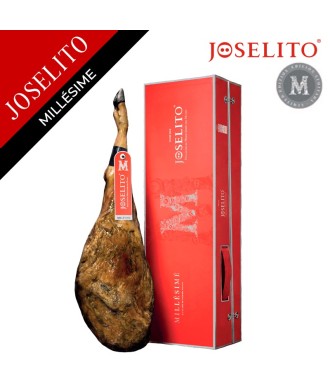
Joselito Millésime Limited Edition Ham 9-10kg
Price: €1,450.00Joselito's vintages are classified into three levels according to their...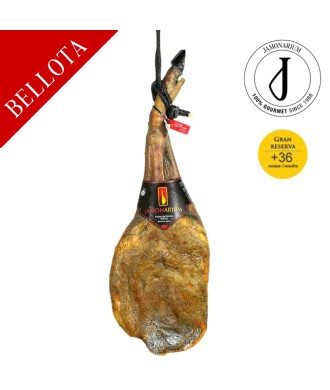
Gran Reserva Iberian Bellota Shoulder, 50% Iberian Breed, 3 years
Price: €219.00(1)This Gran Reserva Iberian Acorn-Fed Shoulder Ham , 50% Iberian Breed, has...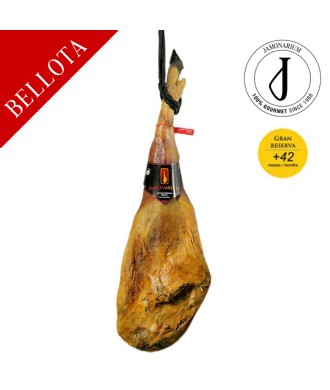
Gran Reserva Iberian Bellota Ham, 50% Iberian Breed, 4 years
Price: €512.00(1)This Gran Reserva Iberian Acorn-Fed Ham , 50% Iberian Breed, has been...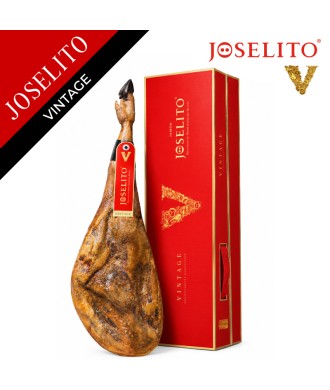
Joselito Vintage Limited Edition Ham 9-10kg
Price: €2,850.00The Pinnacle of Gourmet Luxury Discover the most exclusive and limited...Related posts
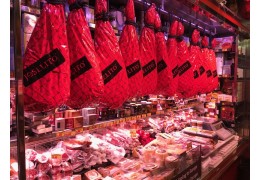 Joselito, ¿el mejor jamón del mundo?
02/07/20241021 LikesHoy hablaremos de un jamón iberico que se autoproclama como el mejor como “El Mejor Jamón Iberico del Mundo”....Read more
Joselito, ¿el mejor jamón del mundo?
02/07/20241021 LikesHoy hablaremos de un jamón iberico que se autoproclama como el mejor como “El Mejor Jamón Iberico del Mundo”....Read more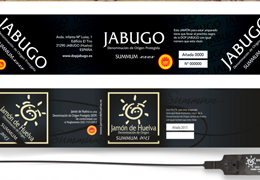 The D.O. Huelva hams become DO Jabugo
12/03/20181889 LikesOne of the great ham events on 2017 is the change of name of DO Huelva, which became DO Jabugo. This change includes...Read more
The D.O. Huelva hams become DO Jabugo
12/03/20181889 LikesOne of the great ham events on 2017 is the change of name of DO Huelva, which became DO Jabugo. This change includes...Read more The salting of Ibérico ham: the key of the salt
11/04/2018494 LikesThe salting Ibérico ham process is one the most important steps in the elaboration process. This is a delicate...Read more
The salting of Ibérico ham: the key of the salt
11/04/2018494 LikesThe salting Ibérico ham process is one the most important steps in the elaboration process. This is a delicate...Read more Sorts of Iberian Ham: we clear it up
27/01/20182056 LikesEvery Iberian ham is normally known as Jamón de Jabugo or Jamón de Pata Negra without taking into account the purity...Read more
Sorts of Iberian Ham: we clear it up
27/01/20182056 LikesEvery Iberian ham is normally known as Jamón de Jabugo or Jamón de Pata Negra without taking into account the purity...Read more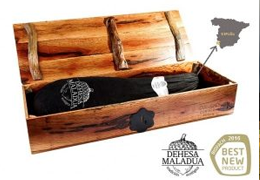 “Maladúa” the world’s most expensive ham
19/07/2016651 Likes“Maladúa” the world’s most expensive ham costs 4,100€ a leg. No doubt Spanish Brand “Dehesa Maladúa” is the world’s...Read more
“Maladúa” the world’s most expensive ham
19/07/2016651 Likes“Maladúa” the world’s most expensive ham costs 4,100€ a leg. No doubt Spanish Brand “Dehesa Maladúa” is the world’s...Read more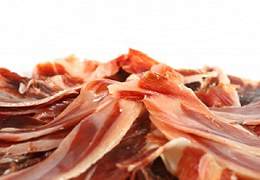 The ham benefits
24/05/20142483 LikesThe Iberian ham is one basic element in the traditional mediterranean diet, well-known for their components full of...Read more
The ham benefits
24/05/20142483 LikesThe Iberian ham is one basic element in the traditional mediterranean diet, well-known for their components full of...Read moreChat with us on WhatsApp
Call us or leave your details and we'll call you back asap
- Price
- Cheeses
-
Jabugo (Huelva) Ham
