This website uses its own and third-party cookies to improve our services and show you advertising related to your preferences by analyzing your browsing habits. To give your consent to its use, press the Accept button.
Cookie preferences
Functional cookies
Technical
No
Yes
Description and cookies
Functional cookies are strictly necessary to provide the services of the shop, as well as for its proper functioning, so it is not possible to refuse their use. They allow the user to browse through our website and use the different options or services that exist on it.
| Cookie | Provider | Purpose | Expiry |
|---|---|---|---|
| PHP_SESSID | www.jamonarium.com | The PHPSESSID cookie is native to PHP and allows websites to store serialised status data. On the website it is used to establish a user session and to pass state data through a temporary cookie, which is commonly known as a session cookie. These Cookies will only remain on your computer until you close your browser. | Session |
| PrestaShop-# | www.jamonarium.com | This is a cookie used by Prestashop to store information and keep the user's session open. It stores information such as currency, language, customer ID, among other data necessary for the proper functioning of the shop. | 480 hours |
| rc::a | It is used to read and filter bot requests. | Persistent | |
| rc::c | It is used to read and filter bot requests. | Persistent |
Advertising Cookies
No
Yes
Description and cookies
These are cookies that collect information about the advertisements shown to users of the website. They can be anonymous, if they only collect information about the advertising spaces shown without identifying the user, or personalised, if they collect personal information about the user of the shop by a third party, for the personalisation of these advertising spaces.
| Cookie | Provider | Purpose | Expiry |
|---|---|---|---|
| ads/ga-audiences | These cookies are used by Google AdWords to re-engage visitors that are likely to convert to customers based on the visitor’s online behaviour across websites. | Session |
Analytics cookies
No
Yes
Description and cookies
Collect information about the user's browsing experience in the shop, usually anonymously, although sometimes they also allow the user to be uniquely and unequivocally identified in order to obtain reports on the user's interests in the products or services offered by the shop.
| Cookie | Provider | Purpose | Expiry |
|---|---|---|---|
| _ga | Registers a unique ID that is used to generate statistical data on how the visitor uses the website. | 2 years | |
| _gat | Used by Google Analytics to throttle request rate | 1 day | |
| _gat_gtag_UA_# | Used to throttle request rate. | 1 minute | |
| _gd# | This is a Google Analytics Session cookie used to generate statistical data on how you use the website which is removed when you quit your browser. | Session | |
| _gid | Registers a unique ID that is used to generate statistical data on how the visitor uses the website. | 1 day |
Excellent  4,9 / 5 (View the 18.841 reviews)



-
Ham
- Whole with bone
-
Boneless
- Cut in slices
- Whole sliced
- Ham types
-
Bellota Ibérico 100% Pata Negra Ham
-
Jabugo (Huelva) Ham
- Salamanca Hams
- Extremadura Hams
- Córdoba Hams
- .Jamón ecológico
- Bellota Ibérico 50% Ham
- Cebo de Campo ibérico Ham
- Cebo ibérico Ham
- Serrano Gran Reserva Ham
- Jamones Joselito
- Sausages
- Whole Dry-cured Sausage
- Sliced Dry-cured Sausage
- Iberico sausages
- León Sausages
-
Types of sausages
- Cheeses
- Whole cheese
- Cheese in portion
- Sheep Cheese
- Cow Cheeses
- Goat Cheeses
- Dry Cured Cheeses
- Semi Cured Cheeses
- Cheese Packs
-
Cheese Brands
- DO Idiazabal
- Sant Gil Albió
- Mas El Garet
- Viriato
- Zanetti
- Dorrea
- Beiardi
- Rosario Castaño
- Other cheese brands
- Gourmet
- Foie Gras & Pâtés
- Seafood
-
Spanish Canned Fish
- Breadsticks
- Tradicional Dishes
- Olives & Appetizers
- Pulses & Vegetables
- Sweets
- Packs with Gourmet Products
- Gourmet Cans in BOXES
- Gourmet - Brands
- Ramón Peña
- Mas Parés
- Agromar & Arbeyal
- Felipe II Shortbreads
- Imperia
- Mareterra Conservas
- Dardo
- Ortiz
- Yurrita
- Marzo
- Casa Riera Ordeix
- Frinsa
- Ribeira
- Herpac
- Greco Foie Gras
- La Luna
- Los Peperetes
- Bodega Coruña del Conde
- Pago de los Capellanes
- Oil
- Arbequina
- Picual
- Coupage
- Hojiblanca
- Cornicabra
- Manzanilla
- Organic
- With aromas
- Vinegar and dressings
- Olive oil in BOX
- Olive oil in Cans
- Large Format Olive Oil
- Premium Olive Oil
- Olive Oils with Awards
- Olive Oil Packs
-
The best oil mills
- Almazaras de la Subbetica
- Más Tarrés (Olis Solé)
- Oro Bailen
- Cortijo de Suerte Alta
- Oro del Desierto
- Vergara BIO
- Wines
- Spanish red wine
- White wine
- Canned Wines
- Vinos Rosados
- Organic wines
- Sparkling wine (Cava & Champagne)
- Natural wine
- Classic wines
- Sangría
- Vermouth
- Whisky
- Wine packs
-
Wine BY BOX
- Price
- Origine
- D.O. Rioja
-
D.O. Ribera del Duero
- D.O. Priorat
- D.O. Somontano
- AOC Bordeaux
- D.O. Empordà
- D.O. Rias Baixas
- D.O. Bierzo
- D.O. Montsant
- D.O. Rueda
- D.O. Penedés
- D.O. Terra Alta
- D.O. La Mancha
- D.O. Cava
- Other D.O.
- Accessories
SearchSay something...
Nothing found. Please repeat.
Unsupported browser. Sorry...
WishListCart 0There are no more items in your cart
Blog navigationOleic Acid: The Secret of the Mediterranean Diet between Olive Groves and Dehesas

1. What exactly is oleic acid? Science and structure
Oleic acid is a monounsaturated fatty acid belonging to the Omega-9 series. Chemically, it is identified as a long-chain fatty acid found naturally in various animal and vegetable fats. Its main characteristic is that it has a single double bond in its chemical structure, making it much more stable against oxidation compared to polyunsaturated fatty acids (such as Omega-3 or Omega-6).
This stability is key. It means that oleic acid does not "go rancid" or degrade easily when exposed to heat or oxygen, which preserves its nutritional properties for longer, whether in the oil bottle or in the curing process of a ham.
2. Cardiovascular health benefits: The heart protector
The fame of oleic acid is not free. Numerous clinical studies have shown that its regular consumption has a direct impact on the human lipid profile.
Cholesterol control
Oleic acid acts in two masterly ways:
- Reduces LDL cholesterol (the "bad" one): It helps clean the arteries by preventing this cholesterol from depositing on the walls of blood vessels.
- Maintains or increases HDL cholesterol (the "good" one): Unlike saturated fats, which raise both, or some extremely low-fat diets that lower both, oleic acid is selective. It protects good cholesterol, which is responsible for transporting excess fat back to the liver for elimination.
Blood pressure and arterial health
It has been observed that diets rich in this fatty acid help relax blood vessels and improve circulation, which contributes to maintaining healthy blood pressure and reduces the risk of suffering cardiovascular accidents.
3. More than heart: Anti-inflammatory and metabolic properties
Although its best-known benefit is cardiovascular, oleic acid is a biological all-rounder:
- Anti-inflammatory Power: Oleic acid helps reduce markers of inflammation in the body, such as C-reactive protein. This is vital not only for recovery after exercise but for preventing chronic degenerative diseases.
- Skin Health: Being part of cell membranes, it contributes to maintaining skin hydration and elasticity from the inside.
- Insulin Sensitivity: It helps our cells better manage glucose, being a preventive ally against type 2 diabetes.
4. The big myth: Are all animal fats bad?
For decades, traditional nutrition lumped all animal fats into the same bag, labeling them as "saturated" and, therefore, harmful. Today we know that this is an oversimplification and wrong.
The quality of animal fat depends directly on the animal's diet and lifestyle. This is where the Iberian pig breaks all the rules.
5. Acorn-fed Iberian Ham: The "Olive Tree with Legs"
This phrase, popularized by the scientific community, is not a poetic exaggeration. Acorn-fed Iberian ham has a lipid profile that more closely resembles a vegetable than a conventional terrestrial animal.
The miracle of the Acorn (Bellota)
The secret lies in the montanera, the final breeding phase where the Iberian pig lives freely in the dehesa and feeds exclusively on acorns and herbs. The acorn is extremely rich in oleic acid (more than 60% of its fat is oleic).
The Iberian pig has a unique genetic capacity: it is able to infiltrate those unsaturated fats directly into its muscle fibers. By eating acorns, the pig transforms that vegetable fat into its own tissue. The result is a product where more than 50-55% of its fat is oleic acid.
Eating a slice of acorn-fed Iberian ham is, in nutritional terms, very similar to taking a dose of extra virgin olive oil, but with the addition of high-value biological proteins, B vitamins, and minerals like zinc and iron.
2. Extra Virgin Olive Oil: The gold standard
If ham is the "olive tree with legs," Extra Virgin Olive Oil (EVOO) is the pure concentrate of this benefit. Depending on the olive variety (such as Picual or Cornicabra, which are especially high in oleic), this fatty acid can represent up to 80% of the total oil content.
EVOO is the perfect vehicle to incorporate oleic acid into every meal. Furthermore, being a natural fruit juice obtained by mechanical procedures, it preserves polyphenols and vitamin E, which act in synergy with oleic acid to enhance its antioxidant effect.
7. Myths and Truths: Dismantling false beliefs
To navigate the world of nutrition with judgment, it is necessary to clarify certain concepts that usually lead to confusion:
Myth 1: "Oleic acid is more fattening than other fats"
Truth: All fats have approximately 9 calories per gram. However, oleic acid has a greater satiating effect than saturated fats or refined carbohydrates, which helps control appetite and, in the long term, can favor the maintenance of body weight.
Myth 2: "Iberian ham raises cholesterol"
Truth: Acorn-fed Iberian ham, due to its high oleic acid content, helps balance the lipid profile. Not only does it not raise "bad" cholesterol, but it helps protect the circulatory system.
Myth 3: "If you cook with olive oil, the oleic acid disappears"
Truth: As we mentioned, oleic acid is very stable. It resists temperatures up to 180°C without significantly degrading, making it the safest and healthiest fat for cooking, far above seed oils (sunflower, corn, etc.).
8. How to identify and choose products rich in oleic acid
Not everything that glitters is gold, nor is all ham or oil equally healthy. To ensure you are getting a real dose of oleic acid, follow these tips:
- In Ham: Always look for the black label (100% Acorn-fed Iberian) or the red label (Acorn-fed Iberian). They are the only ones that guarantee the animal has transformed the oleic acid from the acorn into its own fat.
- In Oil: Always opt for "Extra Virgin." Refined oil loses much of the minor components that accompany the oleic acid.
- Observe the fat: In a good ham rich in oleic, the fat should be shiny and melt almost on contact with the fingers at room temperature. That is a sign of a high concentration of unsaturated fatty acids.
9. Conclusion: Towards intelligent nutrition
Oleic acid is the bridge that unites gastronomic pleasure with the responsibility for our health. Whether enjoying the melting texture of an acorn-fed Iberian ham or the fresh aroma of a good olive oil, we are providing our body with the necessary tools to function correctly.
The next time you choose what to put on your table, remember that it's not about avoiding fats, but about choosing those that, like oleic acid, have been revered for millennia for their ability to protect us from within.
Related posts
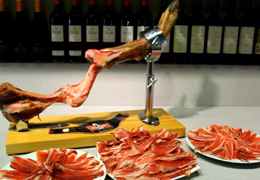 How can we use serrano and ibérico bellota spanish ham bone?
28/02/2018755 LikesAmong gastronomy, cookers and gourmet fooding lovers; it is well known the bone of iberico de bellota and serrano...Read more
How can we use serrano and ibérico bellota spanish ham bone?
28/02/2018755 LikesAmong gastronomy, cookers and gourmet fooding lovers; it is well known the bone of iberico de bellota and serrano...Read more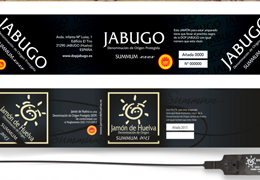 The D.O. Huelva hams become DO Jabugo
12/03/20181889 LikesOne of the great ham events on 2017 is the change of name of DO Huelva, which became DO Jabugo. This change includes...Read more
The D.O. Huelva hams become DO Jabugo
12/03/20181889 LikesOne of the great ham events on 2017 is the change of name of DO Huelva, which became DO Jabugo. This change includes...Read more The salting of Ibérico ham: the key of the salt
11/04/2018494 LikesThe salting Ibérico ham process is one the most important steps in the elaboration process. This is a delicate...Read more
The salting of Ibérico ham: the key of the salt
11/04/2018494 LikesThe salting Ibérico ham process is one the most important steps in the elaboration process. This is a delicate...Read more Canned sardines and fish: a brief explanation
Posted in: Other26/06/2017733 LikesSardines and anchovies are very appreciated in and outside Spain. I propose to get into the history of Sardinophilie...Read more
Canned sardines and fish: a brief explanation
Posted in: Other26/06/2017733 LikesSardines and anchovies are very appreciated in and outside Spain. I propose to get into the history of Sardinophilie...Read more Sorts of Iberian Ham: we clear it up
27/01/20182056 LikesEvery Iberian ham is normally known as Jamón de Jabugo or Jamón de Pata Negra without taking into account the purity...Read more
Sorts of Iberian Ham: we clear it up
27/01/20182056 LikesEvery Iberian ham is normally known as Jamón de Jabugo or Jamón de Pata Negra without taking into account the purity...Read more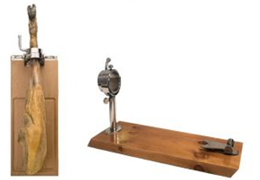 How to choose your perfect ham holder? Over-table or wall ham holder?
06/07/20171056 LikesWith the arrival of winter, festivities and christmas holidays we love enjoying the best fooding products as hams....Read more
How to choose your perfect ham holder? Over-table or wall ham holder?
06/07/20171056 LikesWith the arrival of winter, festivities and christmas holidays we love enjoying the best fooding products as hams....Read moreChat with us on WhatsApp
Call us or leave your details and we'll call you back asap
- Price
- Cheeses
-
Jabugo (Huelva) Ham
